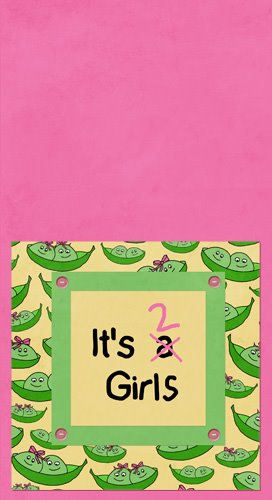
Friday, October 20, 2006


. Posted by Picasa

Another really good card from Postsecret.com Posted by Picasa

Wednesday, October 18, 2006

What Bizarre Day does your birthday fall on?


My Birthday:

June 21 is . . . .Cuckoo Warning Day
More Info on Cuckoo Warning Day

BEWARE! It will be a wet summer if the sound of the cuckoo is heard today, June 21.

Also June is a pretty interesting month for holidays...

June is . . . . Adopt-A-Shelter-Cat Month, American Rivers Month, Cancer In The Sun Month, Dairy Month, Turkey Lover's Month, National Accordian Awareness Month, National Fresh Fruit and Vegetable Month, National Ice Tea Month, National Papaya Month, National Pest Control Month, National Rose Month, Fight The Filthy Fly Month, and Zoo and Aquarium Month

Click on the headline to find your own special day. :)

Sunday, October 15, 2006

First Picture! My new nieces!


Left:
Sophia Sarah
(Japanese name: Sara)
4lbs, 5oz.
17 inches
1960 grams, 43cm
Oct 14, 2006 @ 12:53p.m.

Right:
Scarlette Hannah
(Japanese name: Hana)
3lbs, 8oz.
16 inches
1590 grams, 41cm
Oct 14, 2006 @ 1:04p.m.

Sigh

Blogspot appears to be acting up again. I'm having tons of problems loading pictures and if I do get them uploaded they don't publish fully etc. I'll keep working away at it, but it's most frustrating to have to try to publish an entry 10 times and it still doesn't work right! I suppose you get what you pay for... :)

A picture my friend Cory took. I am 'borrowing' it, I hope he doesn't mind. :)  Posted by Picasa

Just imagine all the Wal-Marts! Posted by Picasa

Wally World Posted by Picasa

All the happiness you can cram into a basket available at your local Wal-Mart Posted by Picasa

What we need are some bigger stores, these just aren't large enough...... Posted by Picasa

World of Wal-Mart Posted by Picasa

"Resistance Is Futile. You will be Assimilated."

Click on the headline for an excellent article about Wal-Mart.

It's fairly long but here are some interesting bits.

The Wal-Mart You Don't Know:

Wal-Mart is not just the world's largest retailer. It's the world's largest company--bigger than ExxonMobil, General Motors, and General Electric. The scale can be hard to absorb. Wal-Mart sold $244.5 billion worth of goods last year. It sells in three months what

number-two retailer Home Depot sells in a year. And in its own category of general merchandise and groceries, Wal-Mart no longer has any real rivals. It does more business than Target, Sears, Kmart, J.C. Penney, Safeway, and Kroger combined. "Clearly," says Edward Fox, head of Southern Methodist University's J.C. Penney Center for Retailing Excellence, "Wal-Mart is more powerful than any retailer has ever been." It is, in fact, so big and so furtively powerful as to have become an entirely different order of corporate being.

There is no question that Wal-Mart's relentless drive to squeeze out costs has benefited consumers. The giant retailer is at least partly responsible for the low rate of U.S. inflation, and a McKinsey & Co. study concluded that about 12% of the economy's productivity gains in the second half of the 1990s could be traced to Wal-Mart alone.

Steve Dobbins has been bearing the brunt of that switch. He's president and CEO of Carolina Mills, a 75-year-old North Carolina company that supplies thread, yarn, and textile finishing to apparel makers--half of which supply Wal-Mart. Carolina Mills grew steadily until 2000. But in the past three years, as its customers have gone either overseas or out of business, it has shrunk from 17 factories to 7, and from 2,600 employees to 1,200. Dobbins's customers have begun to face imported clothing sold so cheaply to Wal-Mart that they could not compete even if they paid their workers nothing.

"People ask, 'How can it be bad for things to come into the U.S. cheaply? How can it be bad to have a bargain at Wal-Mart?' Sure, it's held inflation down, and it's great to have bargains," says Dobbins. "But you can't buy anything if you're not employed. We are shopping ourselves out of jobs."

Wal-Mart wields its power for just one purpose: to bring the lowest possible prices to its customers. At Wal-Mart, that goal is never reached. The retailer has a clear policy for suppliers: On basic products that don't change, the price Wal-Mart will pay, and will charge shoppers, must drop year after year. But what almost no one outside the world of Wal-Mart and its 21,000 suppliers knows is the high cost of those low prices. Wal-Mart has the power to squeeze profit-killing concessions from vendors. To survive in the face of its pricing demands, makers of everything from bras to bicycles to blue jeans have had to lay off employees and close U.S. plants in favor of outsourcing products from overseas.

Of course, U.S. companies have been moving jobs offshore for decades, long before Wal-Mart was a retailing power. But there is no question that the chain is helping accelerate the loss of American jobs to low-wage countries such as China. Wal-Mart, which in the late 1980s and early 1990s trumpeted its claim to "Buy American," has doubled its imports from China in the past five years alone, buying some $12 billion in merchandise in 2002. That's nearly 10% of all Chinese exports to the United States.

Hooray!! My Brother, Christopher and his wife, Yukie had twin Girls yesterday!


I was hoping to have pictures already but alas not yet.
Baby A was 4pounds 5oz her name is Sophia.
Baby B was 3pounds 8oz her name is Scarlette.
They were born a few weeks early due to some complications but Mom and the babies are doing great :)

(My sons were bigger than the combined weight of both girls when they were born!)

Can't wait for the pictures~

No wonder working 2 'full' time jobs is quite possible...


Dear Yahoo!:
How did 40 hours a week come to be known as "full time"?
Richard
Corte Madera, California

Dear Richard:
Workin' nine to five, what a way to make a livin' -- but before 1938, many Americans spent sunrise to sunset on the job, six days a week. And you thought your job was bad.
Workers agitated for a 10-hour day as early as the 1820s. Laws were passed reducing work hours for U.S. federal employees and for women workers in a couple states, but these were poorly enforced and mostly useless.

Estimates of hours worked in manufacturing from 1830 to 1890 show that a 60- to 70-hour workweek was the norm. In 1909, New York garment workers organized a massive strike to demand a 52-hour workweek. Many of the young women who sewed shirtwaists worked seven days a week, 12 hours a day. Only some of the workers got shorter hours. {Not much of a childhood working 84-100+ hours a week is it?}

Finally, after several tries in Congress and battles with the Supreme Court, President Franklin D. Roosevelt got the Fair Labor Standards Act passed in 1938. While this law doesn't set the hours worked per week, it does require overtime pay if employees work more than 40 hours in one week. Of course, employers don't want to pay extra, so they tend to set the full-time week at 40 hours. Salaried workers aren't covered by this law, but it did turn the idea of a 40-hour workweek into the national standard.

Saturday, October 07, 2006

What Stock Character Are You?


The Plucky Heroine Who is Ahead of Her Time
"If I weren't going to be a writer I'd go to New York and pursue the stage. Are you shocked?" - Little Woman You're plucky! You're fiesty! You'll be married by movie's end, come hell or high water! You're a bold statement against trying times, and everyone's against you except your special guy, most likely a Sensative Stud. But don't worry about them, they're all just intimidated by your brilliance, or perhaps that foul temper of yours. Don't worry, they'll all come round to your side in the end.
Take The Quiz Now!Quizzes by myYearbook.com

Thursday, October 05, 2006


Cameron at the ball game Posted by Picasa

My Dad took the boys to a football game on Friday :) Posted by Picasa

Collage Cameron and I made  Posted by Picasa

Collage Cameron and I made Posted by Picasa

I found this on PostSecret.com


A lesson in not letting life's little events get you down! haha